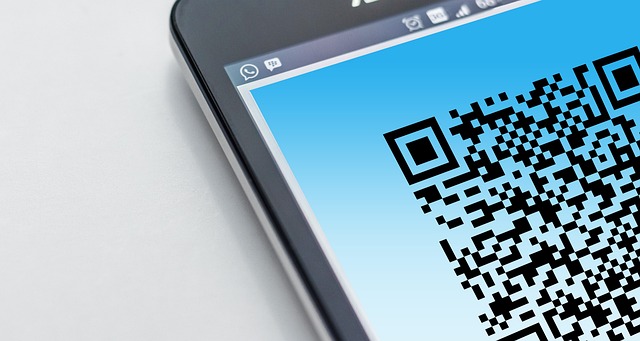
In today's fast-paced digital world, information needs to be accessible and actionable. Imagine a world where a simple scan can whisk you away to a website, reveal contact details, or even initiate a payment. This isn't science fiction; it's the reality brought to life by two-dimensional barcodes, more commonly known as QR codes.
But what exactly are these seemingly magical squares, and why should you care about their generation?
At its core, a QR code is a visual language that bridges the gap between the physical and digital realms. It's a type of matrix barcode that can store a significant amount of information – much more than its one-dimensional predecessor, the familiar UPC barcode found on grocery store items. This information can range from simple text, website URLs, and contact information (like vCards) to Wi-Fi credentials, calendar events, and even payment details.
The magic happens when you point your smartphone or tablet's camera at a QR code. Specialized apps, often built directly into the camera software, can instantly decode the pattern of black squares against a white background. This decoding process translates the visual data into meaningful information that your device can then act upon.
So, why is understanding QR code generation important for you?
The significance lies in their versatility and efficiency. In a world where attention spans are short and convenience is king, QR codes offer a seamless and rapid way to share and access information:
Understanding QR code generation empowers you to not only consume this readily available information but also to create it. Whether you're a small business owner looking to boost engagement, a student wanting to share study resources, or simply someone who values efficient information exchange, mastering the art of QR code generation can unlock a world of possibilities.
In the coming sections, we'll delve deeper into how these codes are generated, the different types available, and practical ways you can leverage this technology to your advantage. Get ready to discover how a simple scan can open up a universe of information!
delta skymiles affiliated airlinesThe humble QR code is ubiquitous—from restaurant menus to digital payments, these black-and-white squares are the bridges between the physical and digital worlds. But how are they actually created, and what makes one QR code generator better than another?
In this post, we’re peeling back the layers on QR code generation, exploring everything you need to know to harness their power effectively in your business or projects.
Generating a QR code is the process of encoding a specific piece of data (like a URL, contact information, or plain text) into a two-dimensional matrix barcode format defined by the ISO/IEC 18004 standard.
A solid QR code generator handles three key tasks:
When evaluating a QR code generator, look for these essential features:
| Feature | Description | Importance |
|---|---|---|
| Error Correction Levels (L, M, Q, H) | Customizable redundancy. Higher levels (H) mean greater scannability even with damage, but result in a denser, larger code. | Crucial for heavily branded or complex designs. |
| Dynamic vs. Static Codes | Static codes permanently link the QR code image to the data. Dynamic codes link the image to a short URL managed by the generator, allowing the destination content to be changed later. | Essential for marketing and long-term use. |
| Customization & Branding | The ability to change colors, add logos, adjust the shape of the data "dots," and change the finder pattern design. | High for aesthetic and brand consistency. |
| Analytics & Tracking | The ability to monitor scan location, time, and device type (only available with Dynamic codes). | Mandatory for marketing campaign measurement. |
| Vector File Output | Support for professional file types like SVG and EPS, ensuring the code remains sharp and scalable at any size. | High for print applications (e.g., billboards, magazines). |
QR codes are a remarkably effective tool, but they aren't without their limitations.
The choice of generator often boils down to your needs: one-off static use or long-term, trackable campaigns.
| Feature | Static Generator | Dynamic Generator |
|---|---|---|
| Cost | Usually Free | Subscription Required |
| Data Change | Cannot be changed after generation | Can be changed anytime |
| Tracking/Analytics | None | Comprehensive metrics available |
| Best Use Case | Permanent, fixed links (e.g., website footer URL) | Campaigns, printed menus, short-term promotions |
The true power of QR codes lies in their versatility. Here are common scenarios where quality generation is crucial:
A small business prints a QR code on product boxes. They use a dynamic generator to link the code to a product registration page.
Instead of manually typing contact details, a user generates a QR code that automatically imports all their contact information (Name, Phone, Email, Address) into the scanner's phone book via the VCard format.
A museum places QR codes next to artifacts leading to detailed audio guides and text translations.
QR codes are far more than a simple novelty; they are essential connectors in the modern digital infrastructure. By understanding the difference between static and dynamic codes, prioritizing error correction for branded codes, and always testing your output, you can generate reliable, trackable, and professional QR codes that effectively bridge the gap between your physical audience and your digital content.
how to check your ip addressWe have navigated the landscape of QR code creation, moving far beyond the simple black-and-white pixel maze. QR codes are not just a nostalgic revival; they are a critical, versatile tool that bridges the physical and digital worlds, offering instant access, streamlined operations, and powerful data tracking.
As we conclude this deep dive into generation, it’s time to solidify the key takeaways, emphasize the most critical decision you must make, and provide a practical checklist for choosing the right generation strategy.
The journey to effective QR code deployment rests on three core concepts:
If there is only one piece of advice you take away from this entire discussion, it is this: For any professional application, marketing campaign, or long-term operational use, you must choose Dynamic QR Code Generation.
While Static codes are excellent for one-off, permanent uses (like including a website URL on a business card that will never change), they offer zero flexibility and zero data.
Dynamic codes are the strategic choice because they provide:
The Trade-Off (Free vs. Paid): While free tools can generate Static codes, almost all reliable Dynamic code functionality requires a paid subscription. Consider this subscription an essential operational cost, not an optional expense, if tracking and flexibility are critical to your success.
Before you finalize your generation tool and print your codes, use this checklist to ensure you’ve chosen the right strategy for your needs:
| Step | Action | Static? | Dynamic? |
|---|---|---|---|
| 1. Define Longevity | Will the linked content ever change, or do you expect the code to be used for more than 6 months? | ❌ No | ✅ Yes |
| 2. Prioritize Data | Do you need to track user engagement (scan rates, location, time)? | ❌ No | ✅ Yes |
| 3. Test the Source | If using a free generator, verify that the code will not expire or be replaced with ads later. | ✅ Fine | ❌ Avoid |
| 4. Check Customization | Does the tool allow you to incorporate your logo and brand colors without dramatically increasing the error rate? | ✅ Yes | ✅ Yes |
| 5. Run the Scan Test | Always print the code (even a test strip) and scan it using 3–5 different devices (old Android, new iPhone, tablet). | ✅ Do this | ✅ Do this |
The one failure point that undermines all the strategic planning is a code that doesn't scan correctly. Always generate your code at the highest possible resolution, factor in the required clear space (the quiet zone) around the code, and thoroughly test the physical printout before mass production.
Your QR code is your instant access portal. By strategically choosing the right generation method—prioritizing dynamic functionality for business and rigorously testing every code—you ensure that your audience can effortlessly transition from the physical world to your digital offering, every single time. Now, go forth and start connecting!